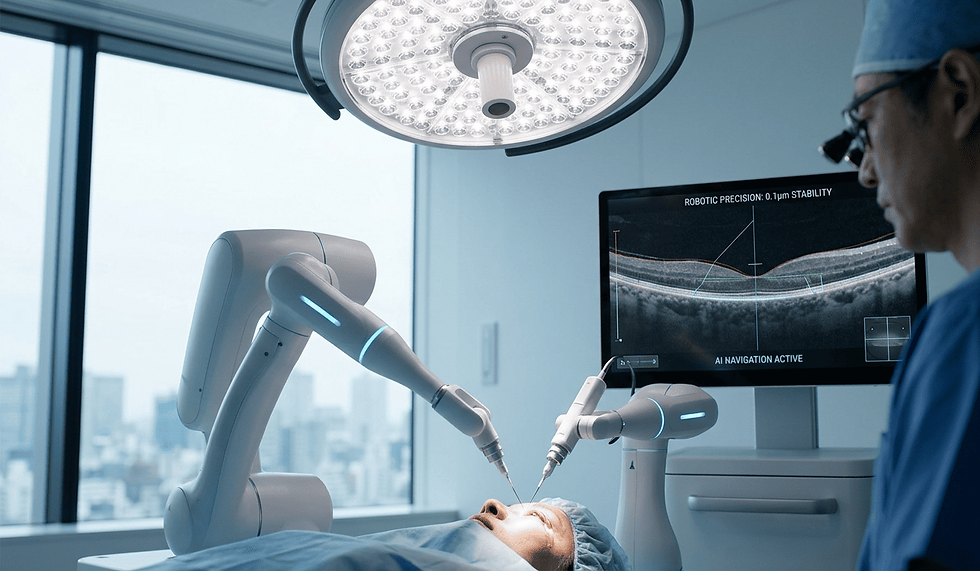
Corneal Transplant vs Cell Therapy: A Comparative Analysis of Endothelial Replacement and Regeneration

I. Introduction: Corneal Transplantation vs Endothelial Cell Injection Therapy
For patients suffering from corneal edema due to endothelial failure, two primary strategies exist: the established method of corneal transplantation and the cutting-edge approach of cell therapy. The debate of corneal transplant vs cell therapy is fundamentally a comparison between tissue replacement (transplantation) and cellular regeneration (injection therapy).
While transplantation, particularly modern endothelial keratoplasty (DMEK/DSAEK), has dramatically improved patient outcomes, it faces limitations concerning donor scarcity and invasiveness. Cell therapy, pioneered in Japan (Neltependocel), offers a disruptive solution designed to overcome these very challenges. This article provides a comprehensive, head-to-head comparison of these two vital approaches.
II. The Gold Standard Treatment (Corneal Transplant)
Corneal transplantation remains the standard of care globally, with the modern partial-thickness techniques dominating the field.
1. Mechanism (Tissue Replacement):
Endothelial Keratoplasty (DMEK or DSAEK) involves surgically replacing the patient's diseased endothelial layer and Descemet's membrane with a functional donor tissue graft. The surgeon must meticulously unfold and position this delicate graft within the eye's anterior chamber and secure it using a temporary air or gas bubble.
2. Key Drawbacks:
Despite its high success rate, transplantation carries inherent limitations that cell therapy aims to eliminate:
High Invasiveness: While less invasive than full-thickness PKP, it still requires surgically implanting and maneuvering donor tissue, demanding significant skill.
Donor Dependence: It contributes directly to the global donor waiting list crisis, as one donor is generally required per recipient.
Immune Rejection: Since the tissue is foreign, patients face a lifelong, albeit low, risk of immune rejection, necessitating chronic topical steroid use.
Post-Operative Constraints: Patients typically require strict, often uncomfortable, face-down positioning for several days to ensure the bubble adheres the graft to the cornea.
III. The Regenerative Treatment (Cell Therapy)
Cell therapy, exemplified by the Japanese-developed Neltependocel (cultivated endothelial cell injection), represents a new era of biological regeneration.
1. Mechanism (Cell Regeneration):
Instead of transplanting an entire sheet of tissue, cell therapy involves:
Ex Vivo Cultivation: Healthy endothelial cells are harvested from a single donor and multiplied in a lab, providing scalability.
Injection: A cell suspension is prepared and injected through a minuscule incision into the anterior chamber.
Adhesion and Function: The cells are guided by pharmaceutical agents (like ROCK inhibitors) to adhere to the back of the patient's existing cornea, where they re-establish the functional monolayer and pump.
2. Key Advantages:
Low-Invasiveness: The procedure involves minimal surgical trauma (a simple injection), drastically reducing wound size and associated complications.
Scalability: The ability to treat multiple patients from one donor cornea makes the supply sustainable and accessible.
IV. Head-to-Head Comparison
The comparison between corneal transplant vs cell therapy highlights clear trade-offs across several critical dimensions:
Feature | Corneal Transplant (DMEK/DSAEK) | Cell Therapy (Neltependocel) |
Surgical Invasiveness | Moderate (Surgical incision, graft folding/unfolding, gas/air bubble) | Minimal (Micro-injection procedure) |
Donor Supply | High Dependence (1 donor per patient) | Low Dependence (1 donor for multiple patients) |
Immune Rejection | Lifelong Risk (Requires chronic steroid drops) | Lower Risk (Fewer foreign cells; less foreign tissue mass) |
Post-Op Constraints | Required | Minimal |
Target | Tissue Replacement (Replacing a dead sheet) | Cellular Regeneration (Repopulating the existing structure) |
1. Invasiveness & Surgical Complexity:
Cell therapy clearly wins on this front. An injection is inherently less complex and requires a smaller wound than the surgical manipulation of a fragile donor graft.
2. Recovery Time & Visual Acuity:
While DMEK offers rapid recovery (weeks), cell therapy holds the potential for equally fast, if not faster, visual stabilization, achieved with significantly less surgical risk.
3. Risk Profile (Rejection & Complications):
The elimination of the large donor tissue mass in cell therapy substantially reduces the risk of long-term immune rejection compared to even the most refined endothelial transplants.
V. The Economic and Social Impact
While transplantation is widely covered by insurance globally, the high cost and scarcity related to cell therapy introduce new economic considerations.
1. Cost Factors:
The corneal transplant vs cell therapy cost structure differs fundamentally. Transplantation cost is dominated by hospital fees, surgeon time, and donor tissue banking fees. High pricing for cell therapy cost is dominated by the high base price of the bioproduct itself, reflecting its research and cultivation costs.
2. Global Access and Equity:
The greatest societal benefit of cell therapy is its potential to dismantle the cornea donor waiting list in regions facing severe scarcity (e.g., in parts of Asia, Africa, and Latin America). By decoupling treatment from the highly restricted donor supply chain, cell therapy vastly improves global health equity.
VI. Conclusion
The comparison between corneal transplant vs cell therapy defines the progressive evolution of ophthalmology. While endothelial transplantation remains a vital and highly effective procedure, cell therapy, pioneered by Japan's success with Neltependocel, presents a clear and compelling future.
Offering unparalleled advantages in low-invasiveness, sustainability, and patient comfort, cell regeneration technology is quickly setting a new benchmark for treating corneal edema. For patients prioritizing minimal surgical risk and long-term, sustainable vision without donor dependency, the regenerative cell injection approach is the considerable choice for the modern era.
This article was reviewed by
Dr. Daiki Sakai, MD