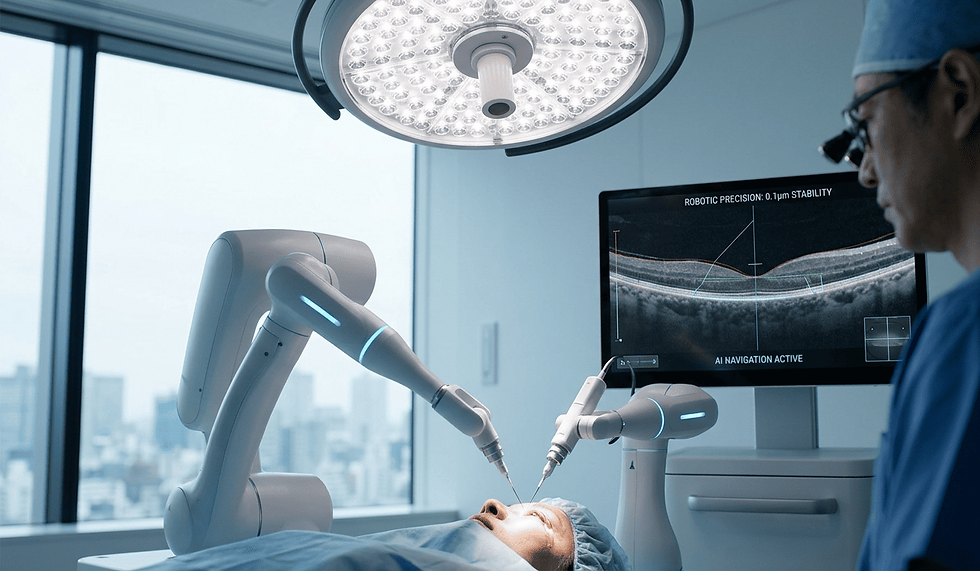
Cornea Edema Cell Therapy: The Future of Endothelial Regeneration in Japan

I. Introduction: Beyond Transplantation to Cell Replacement Therapy for Corneal Edema
Chronic corneal edema results from the irreversible failure of the corneal endothelium—the non-regenerative cell layer responsible for maintaining corneal clarity. While traditional corneal transplantation (DMEK/DSAEK) is the established treatment, it faces inherent challenges: a chronic global shortage of donor tissue and the lifelong risk of immune rejection. The concept of cell therapy is a revolutionary paradigm shift, moving the field beyond tissue replacement toward genuine cellular regeneration.
Japan has emerged as the global leader in this frontier, successfully bringing advanced cell-based solutions to the clinic. This article explores the current clinical reality of cell therapy, exemplified by the injectable cultivated cells (Neltependocel), and the ultimate promise of iPS cell technology.
II. The Rationale for Cell Therapy
The quest for regenerative solutions is driven by the limitations imposed by conventional transplantation.
1. The Challenge of Non-Regeneration: The core biological problem of corneal edema is that the lost endothelial cells cannot be replaced naturally. When cell density drops below a critical threshold, the only solution is to surgically introduce new, functional cells.
2. Key Obstacles Overcome by Cell Therapy: Cell therapy fundamentally addresses the two major hurdles of transplantation:
Donor Scarcity: Conventional transplantation requires one full donor cornea per recipient. Cell therapy aims to multiply cells ex vivo, making one donor source scalable to many recipients.
Rejection Risk: By minimizing the foreign biological material or, ideally, using the patient's own cells (autologous), cell therapy drastically reduces or eliminates the need for lifelong immunosuppression.
III. Current Clinical Reality: Cultivated Cell Injection
The first major clinical success in cell therapy for cornea edema is the injectable cultivated cell suspension procedure, pioneered in Japan.
1. Mechanism: Neltependocel (a brand name representing the cultivated cell product) is a therapy derived from healthy donor corneal endothelial cells.
Cultivation: Cells are harvested from a single donor cornea and multiplied exponentially in a laboratory setting.
Injection: The cell suspension is injected into the patient's anterior chamber through a tiny micro-incision. The cells are aided in adhesion by specialized media (often containing a ROCK inhibitor) and a brief period of positioning.
Regeneration: The injected cells adhere to the inner surface of the patient's damaged cornea, where they re-establish the critical functional monolayer and pump action.
2. Key Advantages:
Low-Invasiveness: The procedure involves a small injection, avoiding the complex, high-risk surgical maneuvering required to unfold and secure a full donor graft (DMEK/DSAEK).
Scalability: One donor cornea can provide material to treat scores of patients, significantly alleviating the donor shortage crisis.
Japanese Leadership: Japan was the first nation to achieve clinical approval and practical use of this technology, positioning it as a commercially available and superior alternative to transplantation for chronic Bullous Keratopathy.
IV. The Next Frontier: iPS Cell Technology
While cultivated cells rely on a donor source, the ultimate goal of cornea edema cell therapy is true independence from donor tissue via Induced Pluripotent Stem (iPS) Cells.
1. Mechanism: iPS technology, stemming from the Nobel Prize-winning work of Dr. Shinya Yamanaka, allows researchers to reprogram a patient's own ordinary body cells (like skin or blood cells) into a state resembling embryonic stem cells. These iPS cells can then be directed to differentiate into highly functional corneal endothelial cells.
2. Solving the Rejection Problem: The potential to use the patient's own cells (autologous transplantation) represents a monumental leap forward, effectively eliminating the risk of immune rejection entirely, removing the need for lifelong immunosuppressive drops.
3. Japanese Research Status: Japan continues to lead the global development of iPS cell application in ophthalmology. Ongoing research and clinical trials are rigorously testing the safety and long-term efficacy of iPS cell-derived corneal endothelial cells, preparing them for the clinical sphere as the next-generation therapy for endothelial failure.
V. Patient Selection and Technical Requirements
The success of cornea edema cell therapy depends on precise patient selection and meticulous post-operative monitoring.
1. Ideal Candidates: Cell injection therapy is most suitable for patients whose corneal damage is largely confined to the endothelial layer (e.g., Fuchs' Dystrophy or post-surgical failure) and who do not have extensive scarring or structural abnormalities in the corneal stroma.
2. Precision Monitoring: Success is not visual recovery alone, but the documented survival of the injected cells. Japanese clinics utilize highly advanced monitoring protocols:
Endothelial Cell Count (ECC): Regularly quantifying the density and morphology of the newly adhered functional cells.
Pachymetry: Monitoring the sustained reduction in corneal thickness, confirming the long-term effectiveness of the regenerated pump function.
3. Comparison to Transplantation: For patients with complex eyes—such as those having previously undergone glaucoma shunt surgery—cell injection is technically advantageous over transplantation, as it avoids the surgical difficulties of manipulating a delicate donor graft around existing hardware.
VI. Conclusion: Regeneration is the New Standard of Care
The emergence of cell therapy marks a definitive transition in the treatment of corneal edema. The development of clinical solutions like Neltependocel validates the scientific goal of replacing the pump mechanism through regeneration rather than reliance on scarce donor tissue.
Japan’s commitment to scientific rigor and rapid clinical translation—from bringing Neltependocel to market to pioneering iPS cell applications—establishes its dominant position in this field. For patients worldwide, access to Japanese ophthalmology offers the most advanced, least invasive, and sustainable path to achieving clear vision, overcoming the chronic challenges of traditional corneal transplantation.
This article was reviewed by
Dr. Daiki Sakai, MD