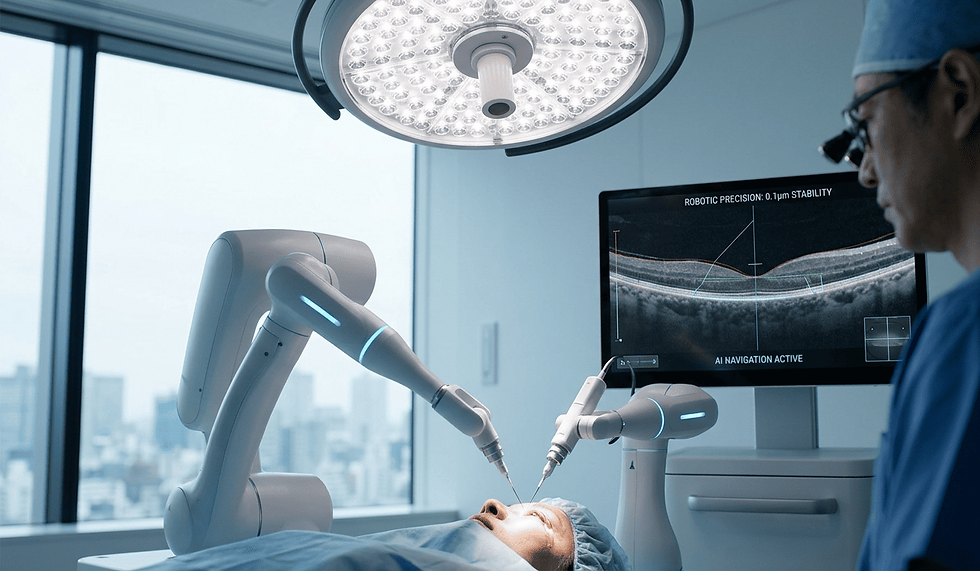
Corneal Transplant Alternatives: Gene Therapy and Endothelial Cell Injection

I. Introduction: Beyond the Donor: The Need for Corneal Transplant Alternatives
Corneal blindness, stemming from various diseases, has traditionally been remedied solely by corneal transplantation. However, this essential procedure faces severe limitations: a persistent global shortage of high-quality donor tissue, the lifetime risk of immune rejection, and the complexity of post-operative management. These constraints have fueled a scientific imperative to develop corneal transplant alternatives.
This article explores two major scientific approaches: cellular injection therapy and gene therapy, which promise a less invasive and more scalable future for ocular clarity.
II. Alternative 1: Gene Therapy
Gene therapy represents a fundamental shift in treatment, aiming to correct the problem at its genetic root rather than replacing the damaged tissue.
1. Inherited Dystrophies: Conditions such as Fuchs’ Endothelial Corneal Dystrophy (FECD) and certain types of stromal dystrophies (like Gelatinous Drop-like Corneal Dystrophy (GDLD)) are caused by defects in specific genes. These faulty genes lead to the premature failure of corneal cells or the accumulation of opaque material within the cornea.
2. Gene Therapy Mechanism: Gene therapy utilizes biological delivery systems, most commonly non-replicating viral vectors like the Adeno-Associated Virus (AAV), to carry a functional copy of the deficient gene into the corneal cells. The corrected genetic material then instructs the cells to produce the necessary healthy proteins, aiming to halt disease progression or reverse the cellular pathology without surgical tissue removal.
3. Japanese Research Focus: Japanese research institutions are actively involved in clinical and preclinical studies focusing on these genetic diseases. By targeting the underlying genetic mutations, these programs aim to create a permanent, non-transplant solution, thereby eliminating the need for tissue transplantation entirely for these specific inherited conditions.
III. Alternative 2: Cultivated Cell Therapy
The most common indication for corneal transplantation is the failure of the endothelial cell layer (Bullous Keratopathy). Cell therapy, particularly the method pioneered in Japan, offers a minimally invasive alternative.
1. The Target Condition: Bullous Keratopathy results from the failure of the corneal endothelial cells—the crucial layer that pumps fluid out of the cornea to maintain its transparency. Once damaged, these cells do not naturally regenerate.
2. Neltependocel (Vyznova) Mechanism: The Neltependocel procedure is a groundbreaking solution developed in Japan. It involves:
Cell Cultivation: Harvesting healthy endothelial cells from a single donor cornea and cultivating them ex vivo to multiply them into sufficient numbers to treat multiple recipients.
Injection: These cultivated cells are suspended in a solution (often containing a ROCK inhibitor to promote adhesion) and injected through a tiny incision into the anterior chamber of the patient's eye.
Regeneration: The cells adhere to the inner surface of the cornea, forming a functional, new endothelial monolayer that restores the vital fluid pump function and clears the corneal swelling.
3. Solution to Scarcity: This method dramatically alleviates the pressure on donor corneal supply, as one donor cornea can potentially serve as the source material to treat numerous patients.
IV. Alternative 3: The Future of Cell Therapy
While Neltependocel utilizes cultivated donor tissue, the ultimate goal of regenerative medicine is to eliminate the need for any donor dependence. This frontier is being led by iPS cell technology.
1. The iPS Cell Promise: Induced Pluripotent Stem (iPS) Cells—derived from a patient's or other's non-ocular cells (like skin or blood)—can be reprogrammed and differentiated into any cell type, including functional corneal endothelial cells.
2. Japanese Leadership: Japan remains the world leader in iPS cell research and clinical application. Several research teams are actively working on clinical trials to use iPS cell-derived corneal endothelial cells for injection into patients with endothelial failure. This offers the ultimate solution: the potential to use the patient's own cells, which would fundamentally eliminate the risk of immune rejection and completely solve the global donor shortage crisis.
3. Advantages Over Transplant: The use of iPS cells minimizes the invasive nature of the procedure (injection vs. complex surgery) and maximizes safety by controlling immune rejection risk.
V. The Japanese Clinical Advantage
The ability to rapidly translate complex scientific concepts into commercially available and clinically tested solutions is a key advantage of the Japanese medical environment in the field of corneal transplant alternatives.
1. Integrated Research-to-Clinic Pathway: Japan's regulatory framework (particularly related to regenerative medicine) supports a streamlined pathway for promising therapies. This allows groundbreaking research—like Neltependocel—to move quickly into clinical use, offering patients access to revolutionary treatments faster than in many other countries.
2. Precision Diagnostics: The success of both gene and cell therapies depends on highly accurate patient selection. Japanese specialists are experts in the necessary genetic analysis (for gene therapy) and precise endothelial cell density mapping (for cell therapy), ensuring the correct intervention is applied to the most suitable candidates at the optimal time.
VI. Conclusion: Redefining Curability in Corneal Disease
The emergence of gene therapy and endothelial cell injection fundamentally changes the prognosis for patients with corneal blindness. These scientific alternatives move treatment away from complex, risk-prone tissue replacement toward less invasive, regenerative solutions.
Japan stands at the global forefront of this revolution, having successfully moved Neltependocel from research into clinical application and pioneering trials using iPS cell-derived corneal cells. For international patients, this leadership provides access to the world's most innovative, safest, and most scalable solutions, offering a profound new hope for restoring long-lasting ocular clarity.
This article was reviewed by
Dr. Daiki Sakai