Cataract Surgery Lens Options: A Comprehensive Guide to Intraocular Lens (IOL) Choices

I. Introduction: Cataract Surgery Lens Options for Customizing Vision with the Intraocular Lens (IOL)
Modern cataract surgery is not merely the removal of a cloudy lens; it is a highly sophisticated refractive procedure aimed at correcting pre-existing vision problems and achieving the patient's desired level of spectacle independence. The core of this transformation lies in the choice of the Intraocular Lens (IOL). The IOL replaces the natural lens, and the specific type selected determines the quality of vision and the patient’s lifestyle post-surgery.
With a wide array of cataract surgery lens options available, understanding the differences is crucial. This article provides a comprehensive guide to the types of intraocular lens (IOL) technology and highlights the precision utilized by Japanese ophthalmologists to customize this choice for optimal visual outcomes.
II. Traditional IOL Options
These foundational lenses are highly reliable and remain the standard choice for many patients globally.
1. Monofocal IOLs (Single Focus Lenses):
Mechanism: The most widely used IOL, providing clear vision focused at a single, specific distance (far, intermediate, or near).
Application: Typically set for excellent distance vision, meaning the patient will likely still require reading glasses for near tasks and potentially glasses for intermediate tasks (like computer work).
Advantage: Monofocal IOLs provide excellent contrast sensitivity and are associated with minimal visual disturbances like halos or glare.
2. Toric IOLs (Astigmatism-Correcting IOLs):
Mechanism: Toric IOLs are specialized monofocal lenses designed to simultaneously correct pre-existing astigmatism (irregular curvature of the cornea).
Success Factor: The success of Toric IOLs is critically dependent on perfect rotational alignment within the eye. Even a small misalignment can significantly reduce their efficacy.
III. Advanced Technology IOLs (Premium Lenses)
Premium IOLs are designed to reduce or eliminate the need for glasses at multiple distances, turning cataract surgery into a form of permanent refractive correction.
1. Multifocal/Trifocal IOLs:
Mechanism: These lenses use diffractive technology (concentric rings) to split incoming light, creating multiple focal points (near, intermediate, and far) simultaneously on the retina. Trifocals offer a distinct focus point for intermediate vision (e.g., computers).
Advantage: Maximum independence from glasses for daily activities.
Disadvantage: The light-splitting mechanism can lead to visual side effects like halos and glare around lights at night, requiring patient neuro-adaptation.
2. EDOF IOLs (Extended Depth of Focus Lenses):
Mechanism: IOLs that create a single, elongated focal point, extending the range of clear vision from far to intermediate distance.
Advantage: Provides excellent distance and intermediate vision with a lower risk of the halos and glare associated with diffractive multifocals, making them highly desirable for night drivers or those with high intermediate visual demands (e.g., tablet use).
3. Accommodative IOLs:
Mechanism: Though less commonly used, these lenses are intended to mimic the eye's natural focusing ability by shifting position within the capsular bag in response to muscle movement, thereby changing focus.
IV. Factors Influencing IOL Selection
The decision on cataract surgery lens options is a highly customized process involving a careful assessment of patient health, anatomy, and lifestyle.
1. Lifestyle and Visual Needs: This is the most critical factor. A patient who drives extensively at night or is a professional golfer will likely prioritize excellent distance vision (Monofocal or EDOF), while a retired reader may prioritize near vision (Multifocal or Monofocal set for near).
2. Ocular Health (Eye Status):
Contraindications: Advanced Premium IOLs (Multifocal/EDOF) are typically contraindicated in patients with pre-existing ocular conditions like advanced glaucoma, severe dry eye, or macular degeneration, as the compromised retina/optic nerve cannot process the split light adequately.
Post-Refractive Status: Patients who have previously undergone LASIK or PRK present unique challenges in IOL calculation, making Monofocal or EDOF IOLs generally safer than Multifocal IOLs due to lower risk of compounded visual side effects.
3. Cost and Coverage: Monofocal IOLs are the most reasonable choice, while Premium IOLs are generally considered elective and require additional payment, making cost a significant deciding factor for many.
V. The Japanese IOL Calculation Precision
The confidence in achieving the target vision from any intraocular lens (IOL) option is directly proportional to the accuracy of the measurements—a core strength of Japanese ophthalmology.
1. Advanced Biometry: Japanese clinics utilize the latest generation of non-contact biometry devices (e.g., IOL Master, Lenstar, or advanced OCT-based biometers) to achieve ultra-high precision in measuring axial length (eye length) and corneal curvature. This precision is fundamental, as even a minor error can result in a significant post-operative refractive surprise.
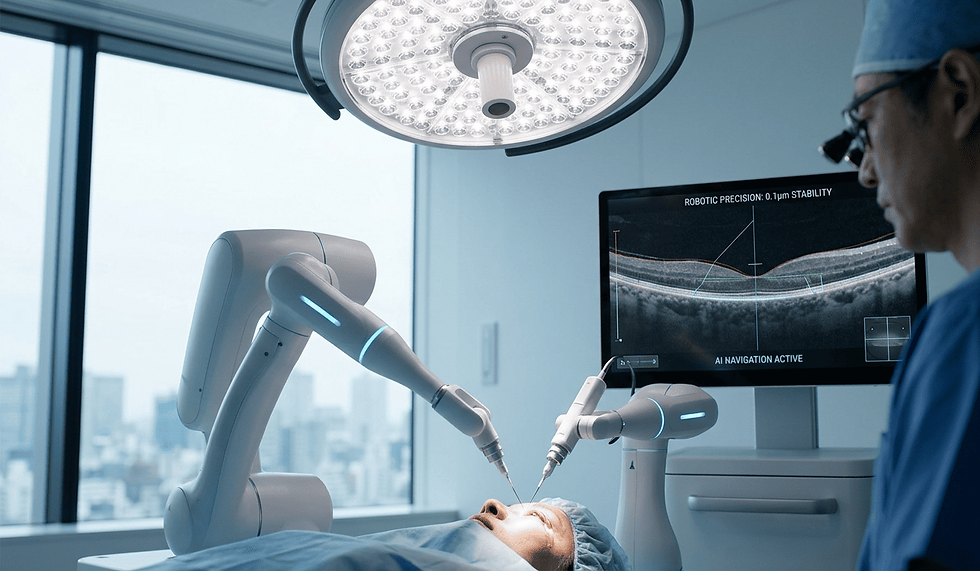
2. Toric Alignment Mastery: For Toric IOLs, success relies on perfect alignment. Japanese surgeons frequently employ intraoperative image-guided systems that overlay the planned incision and axis markings onto the surgeon's view, ensuring the lens is placed at the exact required angle, maximizing the astigmatism correction.
VI. Conclusion: The Best IOL: A Lens Designed Specifically for You
The evolution of the intraocular lens (IOL) has transformed cataract surgery into a powerful tool for achieving lifelong visual freedom. The array of cataract surgery lens options—from reliable Monofocals to sophisticated EDOF and Multifocals—allows for unprecedented customization.
By choosing the precision and expertise of Japanese ophthalmology, patients benefit from world-class diagnostic biometry, specialized expertise in high-risk eyes (such as post-LASIK), and meticulous screening aimed at selecting the perfect lens. This ensures that the final IOL choice is not just effective, but is the safest and most personalized solution for the patient’s lifestyle and anatomical profile, maximizing post-operative quality of vision.
This article was reviewed by
Dr. Daiki Sakai, MD