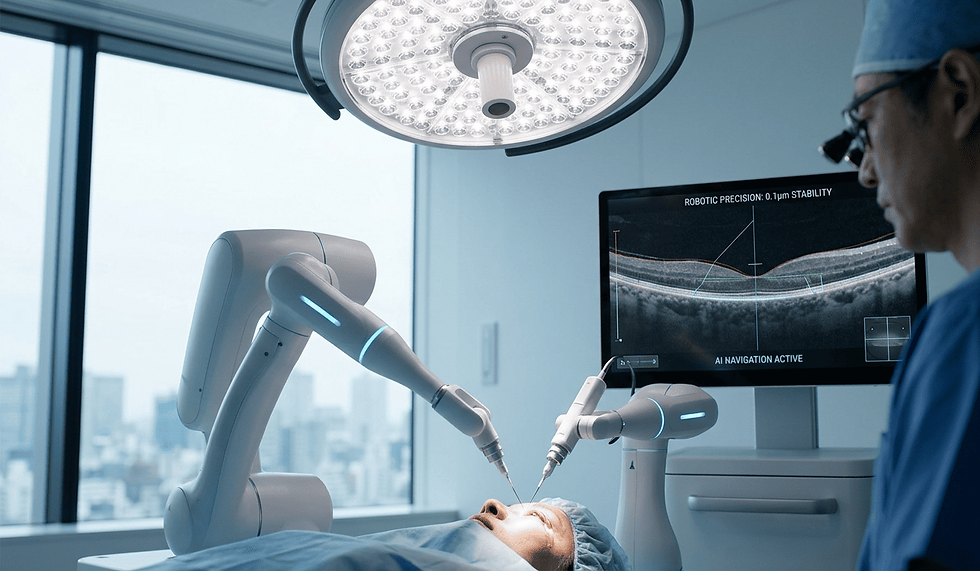
Cataract Extraction: A Historical Journey to Phacoemulsification – The Evolution of Precision Surgery

I. Introduction: The Art and Science of Cataract Extraction
Cataracts are removed in one of the most common and successful surgical procedures in the world. The core objective of cataract surgery—the safe and complete cataract extraction—has a rich, multi-thousand-year history of innovation. Early attempts at removal were crude and often resulted in severe complications. Today, the process is a refined microsurgical technique that prioritizes minimal invasiveness and maximal safety.
This article traces the fascinating evolution of cataract extraction methods, from ancient techniques to the modern gold standard of Phacoemulsification, and explores how continuous technological refinement in places like Japan ensures this crucial surgical step is performed with unparalleled precision and safety.
II. The Historical Evolution
The desire to restore sight motivated practitioners across millennia, leading to several early, often dangerous, techniques.
1. Couching: Dating back to ancient times, couching was the earliest form of cataract extraction. It involved using a sharp instrument to forcefully push the cloudy lens (cataract) downwards, out of the visual axis, and into the bottom of the eye. While this instantly restored blurry vision, it caused severe, frequent complications, including chronic inflammation, glaucoma, and often, total blindness, and is considered obsolete.
2. Intracapsular Cataract Extraction (ICCE - 18th-20th Century): ICCE was a dominant method until the mid-20th century. It involved making a large surgical incision (up to 12mm) and removing the entire lens, including the surrounding capsule. While effective, the large wound required extensive suturing, leading to a high risk of post-operative complications, significant induced astigmatism, and a prolonged, difficult recovery period.
III. The Transitional Standard
ECCE marked a significant step forward, serving as the bridge between ICCE and modern microsurgery.
1. ECCE Mechanism: Unlike ICCE, ECCE involved opening the anterior capsule and manually removing the hardened lens nucleus in one piece through a large incision (around 10mm), while leaving the posterior capsule intact. The intact posterior capsule provided a stable support structure for implanting the artificial Intraocular Lens (IOL).
2. Disadvantages: Despite its improvement over ICCE, ECCE still required a large, sutured incision, leading to a high incidence of post-operative astigmatism and a recovery time measured in months.
3. Current Role: Today, ECCE is rarely performed in developed nations like Japan, typically reserved only for extremely hard, high-grade cataracts that cannot be broken down by ultrasound, or in eyes compromised by trauma where the small-incision approach is deemed unsafe.
IV. The Gold Standard: Phacoemulsification
Phacoemulsification, introduced by Dr. Charles Kelman, is the global gold standard for cataract extraction. Its success lies in its ability to remove the lens through a micro-incision.
1. Mechanism (Ultrasonic Emulsification): The procedure requires only a tiny, self-sealing incision (typically 2.0mm to 3.0mm). A fine titanium probe is inserted, which uses high-frequency ultrasound energy to fragment (emulsify) the hard lens nucleus into small, manageable pieces. Simultaneously, these pieces are suctioned (aspirated) out of the eye through the same probe. The IOL is then inserted through the small incision.
2. Key Advantage: The advent of Phacoemulsification revolutionized ophthalmology due to:
Small Incision: Minimal trauma, rapid wound healing, and reduced risk of infection.
Low Induced Astigmatism: Minimal distortion to the cornea's natural shape.
Rapid Visual Recovery: Patients achieve functional vision within days.
3. The Evolution within Phaco: Phaco technology is constantly being refined, focusing on managing fluidics (the balance of fluid inflow and outflow) and improving the efficiency of nuclear disassembly techniques (like Phaco-Chop and divide-and-conquer), ensuring less total energy is used inside the eye.
V. The Cutting Edge: FLACS
The latest evolution assists the Phaco process by automating the most challenging and precision-dependent steps using laser energy.
1. FLACS Mechanism: Femtosecond Laser-Assisted Cataract Surgery (FLACS) utilizes a highly precise laser to execute several manual steps:
Creating Incisions: Precision, multi-plane incisions.
Capsulorhexis: Creating a perfectly centered, circular opening in the anterior lens capsule.
Lens Fragmentation: The laser pre-softens and fragments the hard nucleus into manageable pieces.
2. Safety and Precision: FLACS is crucial for reducing complications because the laser pre-fragmentation minimizes the amount of ultrasonic energy (CDE) needed during the subsequent Phaco step. This dramatic reduction in CDE minimizes mechanical stress on the cornea and protects the delicate corneal endothelial cells, a key safety advantage.
VI. The Japanese Expertise in Extraction
The commitment of Japanese ophthalmology to safety and meticulous technique ensures the highest standard in cataract extraction.
1. Minimal CDE (Cumulative Dissipated Energy): Japanese specialists are highly focused on minimizing CDE. This is achieved through highly refined surgical techniques (mastery of fluidics and nuclear disassembly) and the early adoption of FLACS technology. This dedication to low energy use directly translates into greater protection of the non-regenerative corneal endothelial cells, ensuring long-term corneal clarity.
2. Consistent Quality Control: Every step of the extraction process, from the initial incision to the final IOL placement, is guided by rigorous protocols and high-definition imaging. This systematic approach ensures that high-quality, safe, and efficient cataract extraction is consistently achieved across all cases.
VII. Conclusion
The history of cataract extraction is a narrative of continuous innovation, moving from invasive methods like Couching to the safety-focused precision of modern Phacoemulsification and FLACS.
The current standard offers unparalleled safety, speed, and visual outcomes. By choosing the expertise and meticulous protocols of Japanese ophthalmology, patients are assured that their procedure will utilize the most refined and advanced technology available, maximizing the safety of the extraction process and securing the best chance for optimal, lasting vision.
This article was reviewed by
Dr. Daiki Sakai, MD