The Lifelong Benefits: ICL Surgery Longevity and Reversibility – Why It’s the Robust Sustainable Solution

Introduction: Beyond Correction: Defining ICL as a Reversible, Long-Term Ophthalmic Solution
For individuals seeking permanent independence from glasses and contact lenses, the Implantable Collamer Lens (ICL) represents a significant leap forward in refractive surgery. Unlike laser procedures that achieve correction by permanently removing corneal tissue (ablation), ICL introduces a third element—a microscopically thin, biocompatible lens—to the eye's internal structure.
What elevates ICL above other solutions is its unique combination of durability and flexibility. It is designed to be a lifelong solution (ICL surgery longevity) while maintaining the critical option of being completely removable (ICL surgery reversibility). This duality provides patients with not only immediate, high-definition vision but also a crucial safety net against future changes in ocular health or technology. We will explore how this long-term promise is upheld, particularly within the stringent standards of Japanese ophthalmic care.
ICL Surgery Longevity and Lifespan
One of the most frequent questions patients ask is, "How long does ICL last?" The definitive answer, supported by over two decades of clinical use, is that the ICL is intended to be a permanent visual solution.
1. ICL Lifespan and Material Science: The ICL lens is not made of standard plastic but of Collamer (a portmanteau of collagen and polymer). This proprietary material is a highly advanced, soft, flexible, and entirely biocompatible co-polymer. The key scientific features contributing to its longevity are:
Biocompatibility: Collamer contains a small amount of collagen, allowing it to integrate harmoniously within the eye without triggering foreign body reactions, calcification, or tissue rejection.
Stability: Once implanted, the Collamer lens does not degrade, discolor, or deteriorate over time. It is designed to function indefinitely within the stable, aqueous environment of the eye.
2. Clinical Evidence: Long-term studies following the first ICL implantations have provided extensive evidence of the lens's remarkable stability and sustained performance over 15 to 20 years. Barring unforeseen trauma or severe, progressive ocular disease, the ICL lens itself will remain functionally effective for the remainder of a patient's life, fulfilling its promise of a permanent correction.
The Concept of Reversibility
While the ICL is a permanent solution, its greatest safety advantage is its complete reversibility. In contrast to LASIK, which involves the irreversible removal of corneal tissue, the ICL procedure does not alter the eye's native structure and leaves the natural lens intact.
1. Defining Reversibility: If a patient’s circumstances necessitate, the ICL can be safely and entirely removed from the eye through a procedure similar to its original implantation. This ability to return the eye to its pre-surgical state (minus the correction the ICL provided) is the ultimate risk mitigation feature.
2. Why Reversibility Matters: The certainty that "is ICL reversible" is an option provides a critical safety net against three main future possibilities:
Medical Necessity: In the rare event of a long-term complication (such as uncontrolled IOP elevation or significant vault issues), the lens can be extracted to resolve the issue.
Progression of Cataract: As patients age, the natural crystalline lens will inevitably cloud (cataract). When the time comes for cataract surgery, the ICL is simply removed before the cloudy natural lens is replaced with a standard intraocular lens (IOL).
Future Technological Advances: If new, revolutionary vision correction technologies emerge decades from now, the patient retains the option to have the ICL removed and benefit from the new solution, an option unavailable to those who have had laser ablation.
Factors Influencing Long-Term Success
While the Collamer material ensures the lens's physical longevity, the long-term success of the procedure—meaning a lifetime of clear vision without complications—relies heavily on two critical anatomical factors and the skill of the surgeon.
1. The Critical Vault: The Vault—the small space between the implanted ICL and the natural lens—is the single most important factor for ICL lifespan. Precise vault maintenance ensures:
Reduced Cataract Risk: A sufficient vault prevents friction and contact with the natural lens, which is the key mechanism for accelerating cataract development.
Optimal Fluid Dynamics: It allows for the free, natural flow of the aqueous humor, maintaining normal IOP and reducing long-term glaucoma risk.
2. Endothelial Cell Count (ECC): The health of the cornea’s innermost layer, the endothelium, dictates the long-term clarity of the cornea. High-quality ICL surgery must protect the ECC. Stable post-operative ECC ensures that the cornea remains transparent for life, securing the overall lifelong benefit of the procedure.
ICL and Age-Related Changes
A permanent solution must integrate seamlessly with the natural aging process of the eye.
1. Presbyopia (Aging Eyes): ICL corrects distance vision but does not prevent presbyopia (age-related near vision decline). Patients who have ICL will still require reading glasses later in life, just as a person with naturally clear distance vision would. However, the presence of the ICL does not prevent the use of reading glasses or the future adoption of presbyopia-correcting techniques, such as monovision.
2. Cataract Intervention: The fact that ICL is reversible becomes a massive advantage when a patient develops cataracts. Unlike laser surgery, which must be factored into complicated IOL calculations, the ICL is simply removed during the cataract procedure. This allows the surgeon to replace the cloudy crystalline lens with a standard, modern IOL, providing the patient with the latest technology for a crisp, clear, post-cataract vision outcome without any anatomical complications from the previous refractive surgery.
The Japanese Advantage in Long-Term Care
The confidence in ICL's longevity and reversibility is highest when the surgery is performed under the rigorous Japan Standard of ophthalmic care.
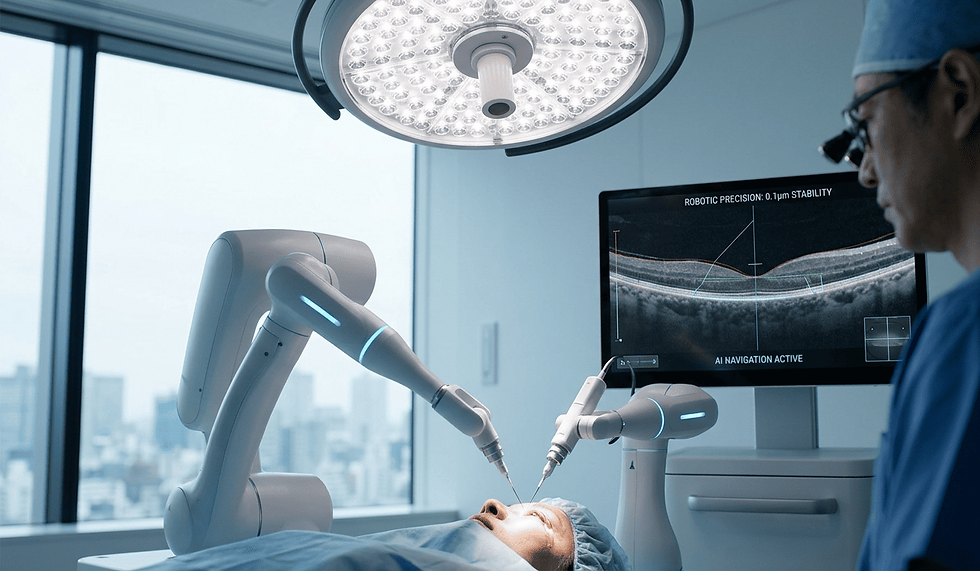
1. Precision in Sizing Guarantees Longevity: The Japanese methodology for ICL surgery places exceptional emphasis on pre-operative diagnostics and sizing. Surgeons utilize advanced tools like UBM (Ultrasound Biomicroscopy) and Anterior Segment OCT to measure the eye's internal dimensions with micro-level precision. This commitment ensures that the selected ICL size is the absolute best fit, guaranteeing optimal Vault dynamics. This meticulous sizing is the primary factor in mitigating the risks of long-term complications (cataract and secondary glaucoma) and maximizing the ICL lifespan.
2. The Reversibility Experience: Japan has been at the forefront of ICL technology for decades. This extensive experience means Japanese clinics have not only a high volume of successful implantations but also a wealth of documented experience in safely performing ICL removal and exchange procedures. This expertise reinforces the peace of mind that the reversibility option is backed by highly skilled surgical teams who can manage any long-term contingency.
Conclusion: The Enduring Promise: ICL Offers Both Clarity Today and Flexibility Tomorrow
The ICL provides a unique ophthalmic solution: it is a permanent correction built on an entirely reversible platform. This dual characteristic positions it as the ultimate sustainable solution for vision correction—offering unparalleled visual clarity today while preserving all future treatment options.
When seeking this lifelong solution, the choice of surgical center is paramount. By choosing the Japanese standard of care, you invest not only in the quality of the lens but in the meticulous precision and long-term commitment of world-leading specialists who ensure that the promise of ICL longevity is securely realized.
This article was reviewed by
Dr. Daiki Sakai, MD