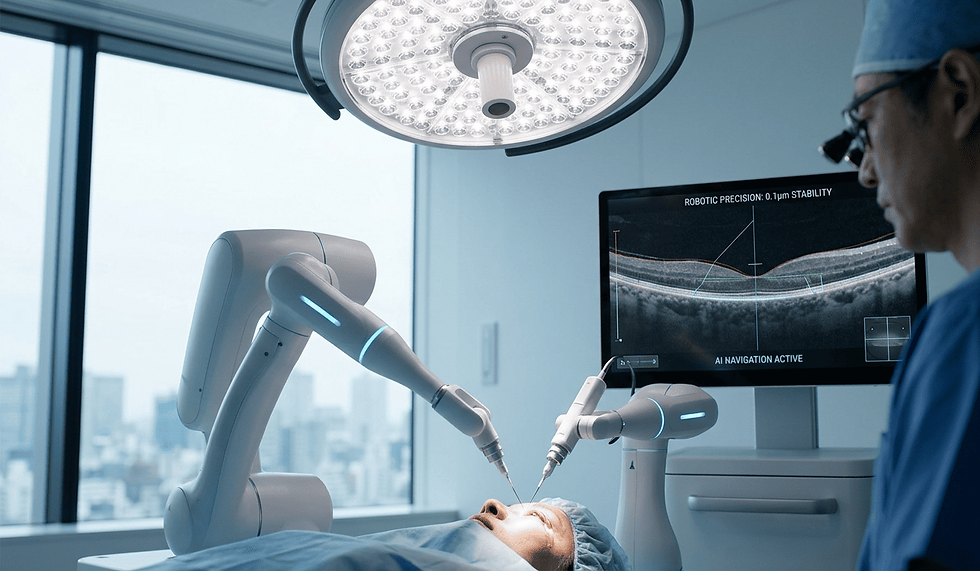
Macular Hole Surgery: Exploring Advanced Options, Vitrectomy Techniques, ILM Peeling, and the Future of Retinal Transplantation in Japan

Introduction: Restoring Central Vision: The Challenge of the Macular Hole
The macula, a small, highly specialized area at the center of the retina, is responsible for our sharp, detailed, central vision—the vision necessary for reading, driving, and recognizing faces. A macular hole (MH), a small break in this delicate tissue, therefore leads to immediate and profound central vision impairment. While once considered untreatable, modern vitreoretinal surgery has transformed the prognosis for MH patients.
Today, the goal of treatment has evolved from mere hole closure to maximizing functional vision recovery. This pursuit has driven the development of complex, specialized surgical techniques, many of which have been pioneered and perfected within the advanced ophthalmic centers of Japan. This article explores the current gold standard treatments and the cutting-edge macular hole surgery options and regenerative approaches defining the future of retinal repair.
What is a Macular Hole? Etiology and Impact
1. Anatomy and Function:
The retina converts light into neural signals. The macula, and its central point, the fovea, contains the highest concentration of photoreceptor cells, providing 20/20 visual acuity and color vision. A macular hole is a full-thickness defect in this foveal tissue.
2. Formation and Etiology:
The vast majority of macular holes are idiopathic (age-related), typically occurring in people over 50. The primary mechanism is vitreous traction. As the vitreous gel (the clear gel filling the eye) liquefies with age, it begins to separate from the retina. If the separation is incomplete over the macula, the remaining attachment exerts tangential traction, eventually tearing the fragile foveal tissue and creating a hole. Other causes include trauma, chronic swelling, or high myopia.
3. Symptoms:
The key symptoms experienced by patients include: metamorphopsia (straight lines appearing wavy or distorted), a severe drop in central visual acuity, and a central scotoma (a blind spot at the center of the visual field).
Historical Evolution of Macular Hole Treatment
The management of macular holes has undergone a dramatic evolution. Historically, the condition was managed expectantly with limited success. The development of early surgical techniques involved complex retinal detachment procedures. The pivotal shift occurred with the advent of Pars Plana Vitrectomy (PPV) in the 1990s, allowing surgeons to access the posterior segment with high precision.
Today, due to continuous advancements in surgical tools and adjunct techniques, the success rate for closing a typical primary macular hole is well over 90\%. This significant success rate underscores the importance of seeking care from centers utilizing the latest, most refined surgical protocols.
The Gold Standard Surgical Options
The universally accepted gold standard for macular hole repair is Vitrectomy (PPV) combined with internal tamponade.
1. Surgical Principle:
The core objective of vitrectomy is twofold:
Relieve Traction: Remove the vitreous gel to eliminate the vitreous traction that caused the hole and continues to stress its edges.
Tamponade: Inject a gas bubble (or silicone oil) into the vitreous cavity. This internal tamponade acts as a physical 'splint,' pressing against the macula and pushing the separated edges of the hole together while they heal. Post-operative face-down positioning is often required to maximize the contact time between the bubble and the macula.
2. Key Surgical Steps:
Modern vitrectomy is performed through micro-incisions (typically 25-gauge or 27-gauge), minimizing tissue damage. The procedure involves: removing the vitreous; applying a special staining dye (e.g., indocyanine green or Brilliant Blue G) to visualize the retinal surface; and performing the crucial step of internal limiting membrane peeling.
Key Additional Techniques for Enhanced Closure and Success
While standard vitrectomy is highly effective, large, chronic, or recurrent macular holes require more sophisticated maneuvers. It is in these advanced techniques that the innovation of Japanese ophthalmology truly shines.
1. Internal Limiting Membrane (ILM) Peeling:
The ILM is the innermost layer of the retina. Peeling the ILM is a standard, essential step in almost all MH surgeries. It achieves two primary goals: removing the residual tangential traction from the retinal surface and releasing growth factors that encourage healing.
2. Inverted ILM Flap Technique:
For large, chronic, or recurrent macular holes, the ILM peeling technique pioneered by Japanese surgeons, notably the team from Okayama University, represents a paradigm shift. Instead of completely removing the ILM, the surgeon peels a large sheet, leaving a small attachment near the edge of the hole. This flap is then inverted and placed over the hole, acting as an autologous scaffold.
Mechanism: This technique not only physically plugs the hole but also introduces a framework that encourages the migration of glial cells, leading to a much higher closure rate and better functional outcomes in challenging cases.
3. ILM Transplantation:
In cases where the ILM is highly damaged or insufficient for a flap, a small piece of donor ILM (harvested from the periphery of the patient’s own retina) is harvested and placed entirely within the defect, similar to a patch. This technique further expands the options for treating the most refractory holes.
Advanced Macular Hole Surgery Options: Autologous Retinal Transplantation for Refractory Cases
When even advanced ILM techniques fail, the next frontier involves filling the anatomical defect with autologous (the patient's own) healthy tissue. This requires a level of micro-surgical dexterity and clinical experience that is the hallmark of leading Japanese vitreoretinal centers.
1. Autologous Retinal Transplantation (ART):
This is the most complex and technically demanding macular hole procedure. It involves:
Harvesting: Carefully harvesting a small, healthy piece of retinal tissue from a non-critical area of the patient’s own retina (usually the far periphery).
Transplantation: Carefully placing this retinal graft directly into the macular hole defect, effectively filling the gap.
Indications: ART is typically reserved for giant macular holes (diameter >1000 μm) and cases where multiple conventional procedures have failed. The surgical success is highly dependent on the surgeon's experience and precision, a domain where Japanese specialists have made significant strides.
The Frontier of Retinal Repair: Future Possibilities for Functional Recovery
While modern surgery achieves excellent anatomical closure, the key challenge remaining is functional recovery—restoring lost photoreceptor function. This is the focus of cutting-edge research, with Japanese research institutions leading the charge in regenerative ophthalmology.
1. Stem Cell Therapy (Photoreceptor Transplantation):
The ultimate goal for refractory macular hole closure is to repopulate the area with new, functioning photoreceptors.
iPS Cells: Japanese researchers, including those building upon the Nobel Prize-winning work on induced Pluripotent Stem (iPS) cells, are exploring the creation and transplantation of lab-grown retinal pigment epithelium (RPE) cells or even immature photoreceptor cells and these combination into the healed macular hole area.
Clinical Promise: While still in experimental phases for macular hole functional repair, this research holds the potential to transition the field from merely structural closure to true vision regeneration, cementing Japan's role as a leader in future ophthalmic therapies.
Conclusion: Precision in the Macula: Why Japanese Expertise Defines the Future of Retinal Surgery
Macular hole surgery is a field that demands the utmost precision, advanced technology, and innovative surgical thinking. The shift from standard vitrectomy to complex, tissue-sparing techniques like the Inverted ILM Flap and Autologous Retinal Transplantation marks a new era in which maximizing long-term functional vision is the core mandate.
By choosing Japanese ophthalmic care, patients gain access to surgeons who are often the originators and most experienced practitioners of these advanced techniques. This confluence of pioneering research, meticulous surgical standards, and commitment to both anatomical and functional recovery makes Japan the optimal destination for those seeking the highest level of care for the most delicate part of the eye.
This article was reviewed by
Dr. Daiki Sakai, MD