Advanced Ophthalmic Regenerative Medicine in Japan: Why Patients Worldwide Choose Japan for Vision Restoration
1.Introduction
Japan has established itself as a global leader for advanced ophthalmic regenerative medicine, offering new possibilities for restoring vision previously considered untreatable. As patients worldwide seek reliable medical solutions, ophthalmic care in Japan has progressed from slowing disease progression to actively regenerating visual function. Supported by a strict yet proactive regulatory framework for regenerative therapeutics, Japan has achieved multiple world-first clinical successes, including the application of Nobel Prize-winning induced pluripotent stem (iPS) cell technology and corneal transplantation using cultured cells that effectively mitigate donor dependence. Combining rigorous scientific research with world-class surgical expertise, medical institutions in Japan attract significant attention from patients determined to overcome complex visual impairments. The country presents a vital option for those looking to regain visual quality and maximize overall quality of life.
2. World-First Retinal Regeneration using iPS Cells and Demonstrated Clinical Safety
In 2014, Japan achieved a historic medical milestone by performing the world’s first retinal transplant surgery utilizing iPS cells, continuously demonstrating the clinical safety and viability of this innovative approach. For conditions like age-related macular degeneration—a primary cause of vision loss that lacked definitive curative solutions—Japanese research consortiums, including the RIKEN Center and the Kobe Eye Center, pioneered the transplantation of retinal pigment epithelial (RPE) cell sheets derived from iPS cells. Addressing the critical primary concerns of cellular tumorigenicity and immune rejection associated with novel stem cell applications, clinical teams compiled reliable data over extended follow-up periods exceeding one year, confirming a clinically feasible safety profile. Through this milestone, Japan became the first nation to successfully transition iPS cell technology from a theoretical scientific breakthrough into a practical therapeutic reality aimed at improving human vision.(1) This established record of safety, validated by robust clinical data and world-first implementations, forms the foundation of international trust in regenerative medicine in Japan.

3. Next-Generation Corneal Regenerative Medicine: Mitigating Donor Dependence
Advanced corneal regenerative medicine in Japan addresses the historical challenges of donor waiting lists while mitigating the risks of immunological rejection to help patients regain clear vision. Traditional corneal transplantation has long been constrained by chronic global donor shortages and the persistent threat of post-operative graft rejection. To circumvent these limitations, Japanese ophthalmologists have commercialized next-generation regenerative products—such as Ocural, Nepic, and Vyznova—which utilize a patient's own cells or pre-cultured corneal endothelial cells delivered as sheets or specialized liquid injections. These advanced methodologies not only alleviate reliance on long-term donor availability but also facilitate minimally invasive interventions that minimize physical strain on the patient.(2)(3) By bypassing the constraints of donor availability, these developments allow patients to undergo timely, safe procedures designed to restore corneal transparency and visual acuity efficiently.
4. Precision Microsurgery and Leading-Edge Medical Equipment
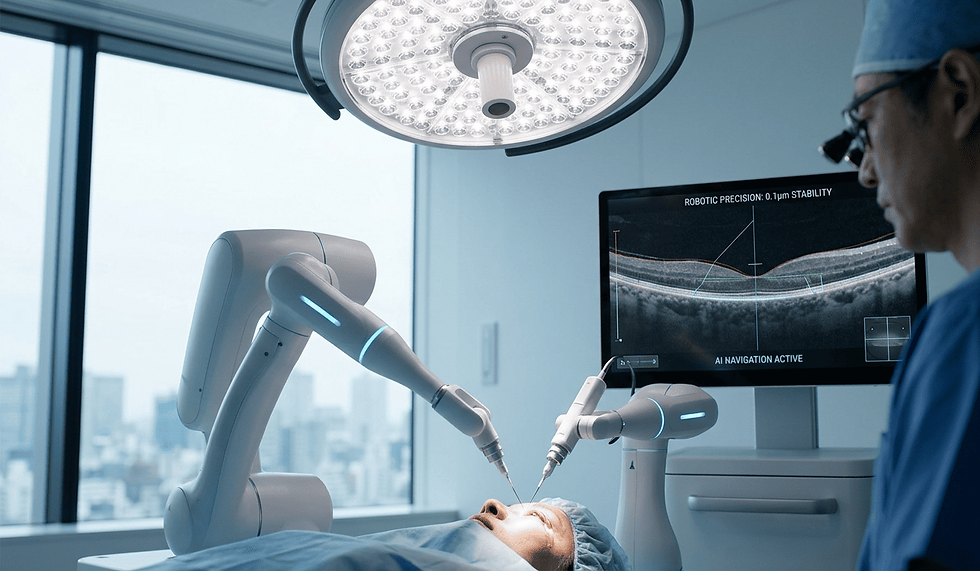
The success of advanced eye surgery Japan relies not only on breakthroughs in cellular biology but also on the high level of precision and technical mastery of its ophthalmic surgeons. Even the most sophisticated regenerative medicine products require precise surgical delivery to achieve optimal therapeutic outcomes. Ophthalmic specialists in Japan possess a refined tradition of meticulous, micro-surgical techniques that lead the field globally. Furthermore, Japanese clinical centers integrate sophisticated technological infrastructure, utilizing 3D digital surgical microscopes and intraoperative Optical Coherence Tomography (OCT) to monitor ocular cross-sections in real-time. This synergy between human dexterity and state-of-the-art diagnostic technology ensures a high standard of operative safety.

5. Conclusion: A Valued Path to Visual Restoration
Exploring options for advanced eye surgery Japan represents a valuable investment in securing a more functional and fulfilling future. Visual health remains one of the most critical components influencing daily capabilities and overall life experience. The ophthalmic regenerative medicine framework in Japan provides an advanced medical solution by merging innovative biotechnology with refined surgical execution. Accessing these state-of-the-art therapies—many of which remain restricted to laboratory research phases in other nations—offers a distinct advantage to individuals managing severe ocular disorders. Initiating contact with international medical concierges in Japan marks a proactive first step toward achieving clear vision and discovering new possibilities for long-term ocular health. For individuals focused on preserving or restoring visual acuity, the specialized clinical pathways available in Japan offer a reliable and effective option.
References
Mandai M, Watanabe A, Kurimoto Y, et al. Autologous Induced Pluripotent Stem Cell–Derived Retinal Pigment Epithelium Cell Sheets for Exudative Age-Related Macular Degeneration. N Engl J Med. 2017;376(11):1038-1046.
Kitazawa K, Sotozono C, Kinoshita S. Current Advancements in Corneal Cell-Based Therapy. Asia Pac J Ophthalmol (Phila). 2022;11(4):335-345.
Hatou S, Shimmura S. Advances in corneal regenerative medicine with iPS cells. Jpn J Ophthalmol. 2023;67(5):489-497.
About the Author
Daiki Sakai, MD, PhD
Japanese Board-certified Ophthalmologist
Founder, Ophthoagent Team