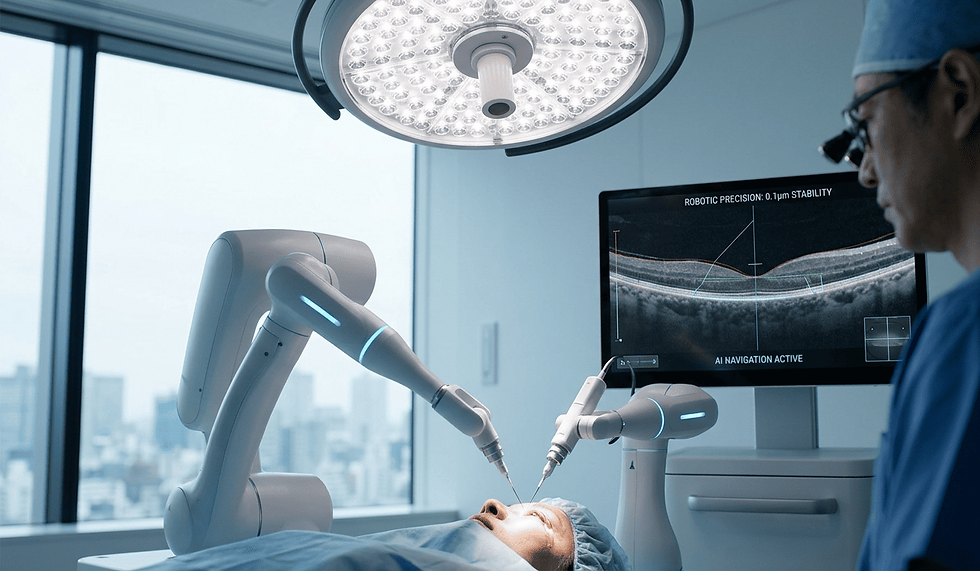
Eye Surgery in Japan: Medical Travel Guide, Required Documents, and Pre-Departure Checklist
If you are planning to undergo Eye surgery in Japan, including ICL implantation, cataract surgery, vitreoretinal surgery, or regenerative medicine, careful preparation before traveling is essential.
Medical travel involves much more than arranging flights and accommodation. Patients are typically required to prepare medical records, passports, visa-related documents (if needed), and payment records before arriving in Japan. Having accurate documentation available allows medical institutions to review your case efficiently and helps reduce unnecessary delays.
Incomplete or inconsistent information may require additional verification, postpone consultations, or affect your treatment schedule. Preparing the necessary documents in advance allows your medical team to evaluate your condition more effectively and helps ensure that your visit proceeds as planned.
This guide explains the documents, medical information, and practical preparations commonly required before traveling to Japan for ophthalmic treatment.
1. Preparation Before Departure Forms the Foundation of Your Medical Journey
Reviewing all required documents and procedures before leaving your home country is one of the most important steps toward receiving medical care smoothly in Japan.
Japanese medical institutions follow standardized clinical procedures designed to prioritize patient safety. Before examinations or treatment begin, physicians need accurate information about your current condition, previous medical history, medications, allergies, and past test results.
If submitted information is incomplete or inconsistent, the medical institution may request additional documents before your appointment. Depending on the circumstances, this review process could affect consultation or surgical scheduling.
For patients planning surgery, preparation should extend beyond arranging travel. Your itinerary should include the initial consultation, pre-operative examinations, surgery, postoperative follow-up, and your expected recovery period.
Sharing the required information with both your medical institution and your medical travel support provider before departure helps minimize administrative procedures after arrival, allowing you to focus on treatment and recovery.
Before You Travel, Confirm the Following
Medical records to be submitted to the receiving medical institution
Passport and visa-related documents (if needed)
Consultation, examination, and surgical schedule
Payment status for medical expenses
Medical interpretation arrangements and internet connectivity
Accommodation and transportation after surgery

2. Medical Information Required for Accurate Clinical Evaluation
Providing complete and accurate medical information in English or Japanese allows your physicians to evaluate your condition appropriately before your visit.
For specialists providing Eye surgery in Japan, treatment decisions are based on objective clinical evidence rather than symptoms alone. In addition to your own explanation, physicians usually require supporting medical documentation prepared by your current healthcare provider.
Depending on your condition, you may be asked to provide:
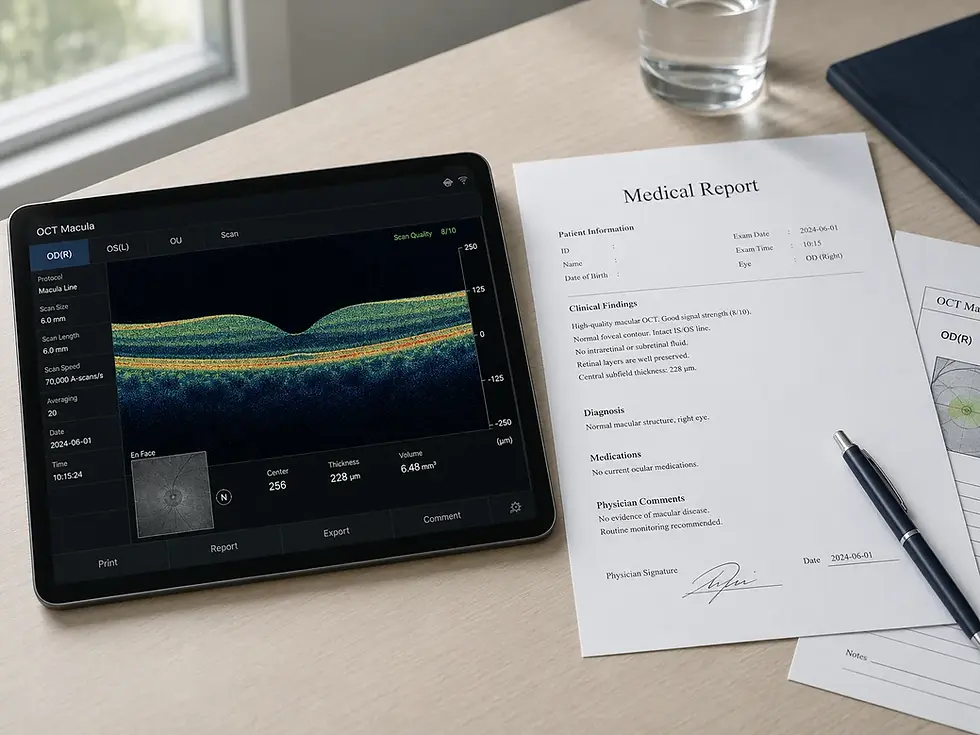
A medical report or referral letter from your treating physician
A current medication list
Medical history, including previous surgeries and allergies
Ophthalmic examination data such as fundus photographs, OCT (Optical Coherence Tomography), corneal topography, or other diagnostic images
For ophthalmic conditions, image data are particularly valuable. Whenever possible, submit the original imaging files—not only written reports—so Japanese ophthalmologists can review anatomical findings directly.
It is important to understand that this pre-arrival review is not a substitute for your examination in Japan. Although physicians can assess the feasibility of treatment using your submitted information, the final diagnosis and treatment plan are determined after an in-person consultation and any additional examinations considered necessary.
If your medical documents require translation, ensure that the translated version corresponds clearly with the original document. Medication lists should include generic drug names, dosages, and administration schedules whenever possible to facilitate accurate review.
Preparing Your Medical Records
Provide the most recent examination results whenever possible.
Submit original imaging data in addition to written reports.
Include generic medication names, dosages, and administration instructions.
Understand that the final treatment decision is made after evaluation in Japan.
3. Preparing Payment Records and Credit Cards
If you make advance payments for your treatment, retain clear documentation showing that the payment has been completed successfully.
Many Japanese medical institutions that accept international patients require a deposit before consultations or treatment begin. The amount and payment method vary depending on the medical institution and the treatment plan.
Payments are typically made by international bank transfer or credit card according to the instructions provided by the medical institution or your medical travel support provider.
If you pay by international bank transfer, keep documents such as the SWIFT Advice, which records the sender, recipient, transfer date, transaction reference, and payment details. In addition to carrying printed copies, it is advisable to store digital copies securely on your smartphone or in cloud storage so they can be accessed whenever necessary.
If you intend to use a credit card in Japan, contact your card issuer before departure. International transactions are sometimes flagged as suspicious activity, which may temporarily restrict card usage. Confirm your overseas transaction settings, available credit limit, and any authentication requirements in advance.
It is also advisable to prepare more than one payment method. Carrying credit cards from different international payment networks may be helpful if one card cannot be used. However, accepted payment methods vary between medical institutions, so confirm the available options before your trip.
Payment Preparation Checklist
Keep proof of payment, such as a SWIFT Advice or equivalent transfer confirmation.
Notify the medical institution in advance if the payer’s name differs from the patient’s name.
Inform your credit card issuer that you will be using your card in Japan.
Confirm your available credit limit and security authentication settings.
Prepare at least two payment methods whenever possible.
Understand how additional medical expenses, if any, will be settled during your stay.

4. Preparing for Your Stay in Japan After Eye Surgery
Planning for your recovery before you travel can help make your stay in Japan safer and more comfortable.
Recovery requirements vary depending on the type of Eye surgery in Japan you undergo. After ophthalmic procedures, patients may be advised to avoid rubbing their eyes, use prescribed eye drops correctly, and temporarily limit activities such as strenuous exercise or bathing.
For this reason, preparing for postoperative daily life is just as important as arranging your accommodation.
Bring comfortable clothing that is easy to change, your regular medications, personal hygiene products, mobile devices, chargers, and any other items you use routinely. If you have food allergies or dietary restrictions, inform both your medical institution and your accommodation provider before arrival whenever possible.
Visitors should also be aware of local customs. In Japan, tipping is generally not expected at hospitals, hotels, restaurants, or most service establishments. If you have questions about charges or services, review the invoice or receipt rather than offering additional gratuities.
Although credit cards and electronic payment methods are widely accepted in many urban areas, some smaller businesses and public transportation services may still require cash. Carrying a reasonable amount of Japanese yen is generally sufficient.
Medical travel support providers may assist with certain aspects of your visit, but services such as airport transfers, sightseeing, shopping assistance, or general travel arrangements are not necessarily included. Confirm the scope of available support before your departure.
What to Bring During Your Stay
Your regular medications and prescription records
Comfortable, easy-to-wear clothing
Smartphone, charger, and portable battery
A small case or pouch for eye drops
Information regarding food allergies or dietary restrictions
An appropriate amount of Japanese yen
Transportation details between your accommodation and the medical institution
5. Preparing Medical Interpretation and Communication Tools
Professional medical interpretation, combined with reliable communication tools, helps ensure accurate understanding throughout your treatment in Japan.
Discussions about diagnoses, surgical procedures, potential risks, alternative treatments, and postoperative care often involve specialized medical terminology. Everyday conversational ability alone may not be sufficient to fully understand these important explanations.
Professional medical interpreters facilitate accurate communication between physicians and patients. Their assistance is particularly valuable during informed consent discussions and when treatment decisions are being made.
Translation applications can still be useful in daily situations, such as communicating at hotels, restaurants, pharmacies, or transportation facilities. Before traveling, install the applications you expect to use and download any available offline language packages in case internet access becomes temporarily unavailable.
To maintain reliable communication, arrange an eSIM, Japanese SIM card, or portable Wi-Fi device before or immediately after arriving in Japan. Maintaining internet access allows you to stay in contact with your medical institution and medical travel support team throughout your stay.
However, translation applications should not be relied upon when interpreting medically important information. Instructions regarding treatment, medication, or emergency care should always be confirmed through your physician or a qualified medical interpreter.
Communication Preparation Checklist
Arrange professional medical interpretation for consultations and informed consent discussions.
Use translation applications only for everyday communication.
Save your medical institution and accommodation in your navigation app.
Prepare an eSIM, Japanese SIM card, or portable Wi-Fi device.
Store emergency contact information for your medical institution and support provider.
Confirm emergency communication procedures before treatment begins.

6. Final Checklist Before Departure
Approximately 72 hours before departure, review all documents, payment records, and medical appointments one final time.
Medical travel requires careful coordination, and even a single missing document may affect your consultation or treatment schedule.
Your passport, medical records, and payment confirmations may all be reviewed by different organizations during your journey. Keeping both printed and digital copies of these documents together allows them to be presented quickly whenever needed.
It is also advisable to share your medical institution’s contact information and your medical travel support provider’s contact details with any accompanying family member or caregiver. This helps ensure smooth communication if travel schedules change or unexpected situations arise.
Final Pre-Departure Checklist
Valid passport
Required visa (if needed)
Medical report or physician referral letter
Ophthalmic imaging (including OCT, fundus photographs, MRI, or CT when applicable)
Current medication list
Deposit payment confirmation
SWIFT Advice or credit card payment records
Consultation, examination, surgery, and follow-up schedules
Medical interpreter arrangements
Accommodation and transportation plans
eSIM, SIM card, or portable Wi-Fi
Contact information for your medical institution and medical travel support provider
Before traveling, also confirm whether each document must be presented as an original, a photocopy, or an electronic file.
Careful preparation before departure can reduce administrative procedures after arriving in Japan, allowing you to focus on your treatment and recovery.
Frequently Asked Questions
How will any remaining balance of my deposit be refunded?
If your final medical expenses are lower than the deposit paid in advance, the remaining balance will be refunded after your account has been settled.
To comply with anti-money laundering (AML) regulations and maintain traceability of financial transactions, refunds cannot be sent to a different bank account or payment method at the patient’s request.
Instead, any refund will be returned to the original bank account used for the transfer or the same credit card used for payment.
Please note that international bank transfers may take additional processing time, and the final amount received may vary depending on banking fees or exchange rate adjustments.
Do all of my medical records need to be translated into Japanese?
Not necessarily.
Many Japanese medical institutions accept medical documents written in English. In these cases, a Japanese translation may not be required.
However, document requirements vary by medical institution. Before submitting your records, confirm whether documents should be provided in English, Japanese, or both.
Can my treatment or surgery be confirmed before I travel to Japan?
No.
The medical information you submit before traveling allows physicians to assess your condition and determine whether further evaluation or treatment may be appropriate.
However, the final diagnosis, treatment recommendation, and surgical decision are made only after your in-person consultation and any necessary examinations in Japan.
About the Author
Daiki Sakai, MD, PhD
Board-Certified Ophthalmologist (Japan Ophthalmological Society)
Founder, Ophthoagent
Dr. Daiki Sakai is a board-certified ophthalmologist in Japan with experience in advanced ophthalmic care, including cataract surgery, retinal diseases, and regenerative medicine. Through Ophthoagent, he supports international patients seeking ophthalmic treatment in Japan by providing specialized medical information, communication support, and guidance throughout the treatment process.