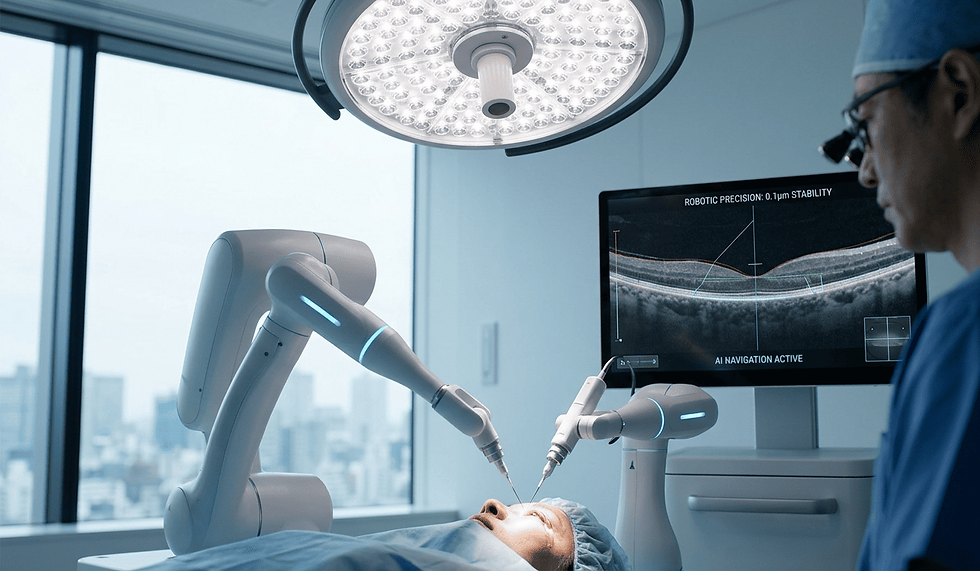
A Deep Dive into ICL Eligibility Criteria and the Rigorous Patient Selection Protocols in Japan

Introduction: The Non-Negotiable First Step – Why Rigorous ICL Eligibility Criteria is Paramount
The pursuit of freedom from glasses and contact lenses has positioned Implantable Collamer Lens (ICL) surgery as a revolutionary procedure, particularly for individuals with high myopia or contraindications to LASIK. Unlike laser procedures that permanently alter the corneal tissue, ICL involves implanting a microscopic, biocompatible lens into the posterior chamber of the eye. This reversibility and tissue-sparing nature are key advantages.
However, the outstanding safety record and visual outcomes of ICL are not solely dependent on the lens technology itself. They are fundamentally rooted in a precise and rigorous eligibility screening process. For patients considering ICL, understanding the detailed criteria is the first and most critical step towards achieving successful, lifelong visual clarity. In Japan, where ophthalmic precision is a defining characteristic, these screening protocols are often held to a standard that exceeds international benchmarks, ensuring maximum safety and optimal surgical outcomes.
Core Refractive and Age Requirements
The Primary Filters – Age, Refraction Stability, and Diopter Range
The initial assessment of ICL suitability centers on several straightforward yet crucial demographic and refractive parameters.
1. Age Constraint: The foundational requirement dictates that candidates must be at least 18 years of age. This is a prerequisite to ensure the eye has reached biological maturity and the refractive error has stabilized. Importantly, many leading Japanese ophthalmic centers often set a more conservative threshold, sometimes preferring candidates to be 21 years or older, reflecting an institutional emphasis on long-term stability and patient maturity.
2. Refractive Stability: A stable prescription is non-negotiable. Candidates must demonstrate that their refraction (nearsightedness, farsightedness, and astigmatism) has remained stable for a period of at least one year prior to the evaluation. This avoids implanting a lens into an eye whose refractive error is still progressing, thereby preserving the long-term accuracy of the correction.
3. Myopia, Hyperopia, and Astigmatism Limits: ICL is widely approved for a broad range of refractive errors. Its significant advantage lies in its ability to effectively and safely correct severe to extreme high myopia, often ranging from –6.0 diopters (D) to –20.0 D, which is typically beyond the scope of LASIK. ICL can also effectively address moderate hyperopia and correct astigmatism (Toric ICLs), provided the degree of astigmatism is within treatable limits. For patients with high myopia, ICL's ability to provide high-definition vision without removing corneal tissue makes it the superior, often only, choice.
Ocular Anatomical & Health Criteria
The Anatomical Blueprint – Crucial Ocular Health and Measurement Standards
Beyond the prescription, a detailed anatomical and cellular assessment is critical to ensure the eye can safely accommodate the lens and maintain long-term health.
1. Anterior Chamber Depth (ACD) – The Safety Space: The ICL lens is positioned in the posterior chamber, between the iris and the natural lens. The Anterior Chamber Depth (ACD)—the distance from the cornea's innermost surface to the natural lens—must be sufficient to allow for safe implantation and adequate circulation of the aqueous humor. A typical minimum requirement is 2.8 mm or greater. Japanese screening protocols are meticulously focused on this measurement, as insufficient ACD can increase the risk of cataract formation or angle closure glaucoma.
2. Endothelial Cell Count (ECC) – A Cornerstone of Longevity: Perhaps the single most important cellular metric for ICL longevity is the Endothelial Cell Count (ECC). The corneal endothelium is a delicate, non-regenerative layer of cells responsible for keeping the cornea clear. The presence of a foreign body (the ICL) necessitates a robust and healthy ECC to prevent long-term damage. While international guidelines set a minimum, Japanese clinics frequently adhere to a higher, more conservative minimum ECC to guarantee the long-term vitality of the cornea. This strict adherence to ECC preservation reflects the Japanese culture of prioritizing patient safety over decades, not just years.
3. Corneal Health: ICL serves as the primary solution for patients who are deemed ineligible for LASIK due to thin corneas or conditions like forme fruste keratoconus (early-stage cone-shaped cornea). The screening must meticulously exclude individuals with active corneal diseases, chronic dry eye, or a history of recurrent corneal erosions, though ICL itself does not induce or worsen dry eye in the way laser ablation might.
Exclusion & Contraindications
Absolute Exclusion – When ICL Surgery is Contraindicated
Certain pre-existing conditions present absolute barriers to ICL surgery, as the risks significantly outweigh the benefits.
1. Active Ocular Diseases: Patients suffering from active, uncontrolled eye diseases are excluded. This includes advanced or uncontrolled glaucoma, active uveitis (inflammation of the uvea), severe diabetic retinopathy, and any retinal detachment that has not been successfully treated. Any condition that compromises the integrity or long-term health of the posterior segment of the eye must be addressed before ICL is considered.
2. Systemic Health Barriers: Major systemic health issues that compromise healing or pose risks under local anesthesia must be flagged. Patients with uncontrolled severe diabetes, certain autoimmune disorders (e.g., severe rheumatoid arthritis, lupus), or any condition requiring chronic use of steroids or immunosuppressants (which can affect healing or intraocular pressure) are typically contraindicated.
3. Pregnancy and Hormonal Fluctuation: ICL surgery is postponed for women who are pregnant or breastfeeding. Hormonal fluctuations during these periods can temporarily alter the eye's shape and prescription, making accurate lens sizing impossible. Stability is required before proceeding.
The Superiority of Japanese Screening
The "Japan Standard": Why Our Pre-Surgical Screening Excels
The decision to travel for an elective procedure is significant, and the choice of destination should be based on safety, expertise, and precision. When it comes to ICL, the screening and execution protocols in Japan offer a distinct advantage: The Japan Standard of Ophthalmic Care.
1. Advanced Diagnostics and Verification: Japanese ophthalmology centers are pioneers in the integration of cutting-edge diagnostic technology. Screening is not based on single measurements but on multiple verification methods using world-class machines, including:
3D Anterior Segment Imaging: Advanced corneal topography and tomography devices that provide precise 3D mapping of the anterior segment, essential for detecting subtle forms of keratoconus and measuring ACD.
UBM (Ultrasound Biomicroscopy): Used for extremely high-resolution imaging of the ciliary sulcus and posterior chamber, allowing for the most accurate measurement of the internal eye structures crucial for lens sizing.
2. Unparalleled Precision in Lens Sizing: The ultimate success of ICL relies on selecting the lens with the perfect vault—the distance between the implanted ICL and the natural crystalline lens. A high vault risks angle closure; a low vault risks contact and early cataract formation. Japanese ICL specialists combine multiple precise measurements (ACD, White-to-White, UBM-derived sulcus-to-sulcus diameter) with sophisticated proprietary algorithms. This dedicated, conservative approach to sizing—often backed by the experience of surgeons who perform an exceptionally high volume of ICLs—is what minimizes the risk of long-term complications and ensures optimal aqueous humor flow, distinguishing Japanese outcomes globally.
3. Long-Term Safety Culture and Data: The Japanese medical ethos is centered on long-term patient safety and health preservation. This means that the screening criteria adopted by Japanese clinics are often stricter than the manufacturer's minimums. This commitment, underpinned by comprehensive patient follow-up and the meticulous collection of long-term surgical data, translates directly into a higher assurance of safety and longevity for international patients.
What to Expect from Your Initial Consultation
Your ICL Journey – A Step-by-Step Guide to the Screening Process
For the international patient, navigating the screening process in Japan is made simple, though the medical standards remain uncompromisingly high.
Comprehensive Baseline Examination: This includes standard tests for visual acuity, refraction, intraocular pressure, and dilated fundus examination (retina health check).
Biometric and Cellular Measurements: This is where the depth and precision of the Japanese standard come into play—precise measurements of ACD, ECC, and WTW are conducted using the advanced diagnostic suite mentioned above.
Consultation with a Japanese ICL Specialist: The final decision is not machine-driven. An experienced Japanese ICL surgeon reviews all the high-precision data and conducts a personal consultation to discuss the patient’s lifestyle, expectations, and any remaining concerns. This personalized human review ensures the final lens size and surgical plan are meticulously tailored.
Conclusion: Achieving Vision Clarity – The Path Forward with Japanese Ophthalmic Expertise
The path to clear vision through ICL surgery is paved by accurate patient selection. Understanding the ICL eligibility criteria is essential, but the ultimate security and outcome are determined by the rigor with which those criteria are applied.
By choosing to explore your options in Japan, you are not merely seeking a surgical procedure; you are accessing the Japan Standard of ophthalmic care—a world-leading combination of advanced diagnostic technology, stringent patient selection protocols, and highly experienced specialists committed to maximizing your safety and visual results.
If you believe you can get ICL and seek a level of surgical excellence that prioritizes long-term ocular health, the next step is simple.
This article was reviewed by
Dr. Daiki Sakai, MD